Are 32″ gravel wheels faster than 29″?
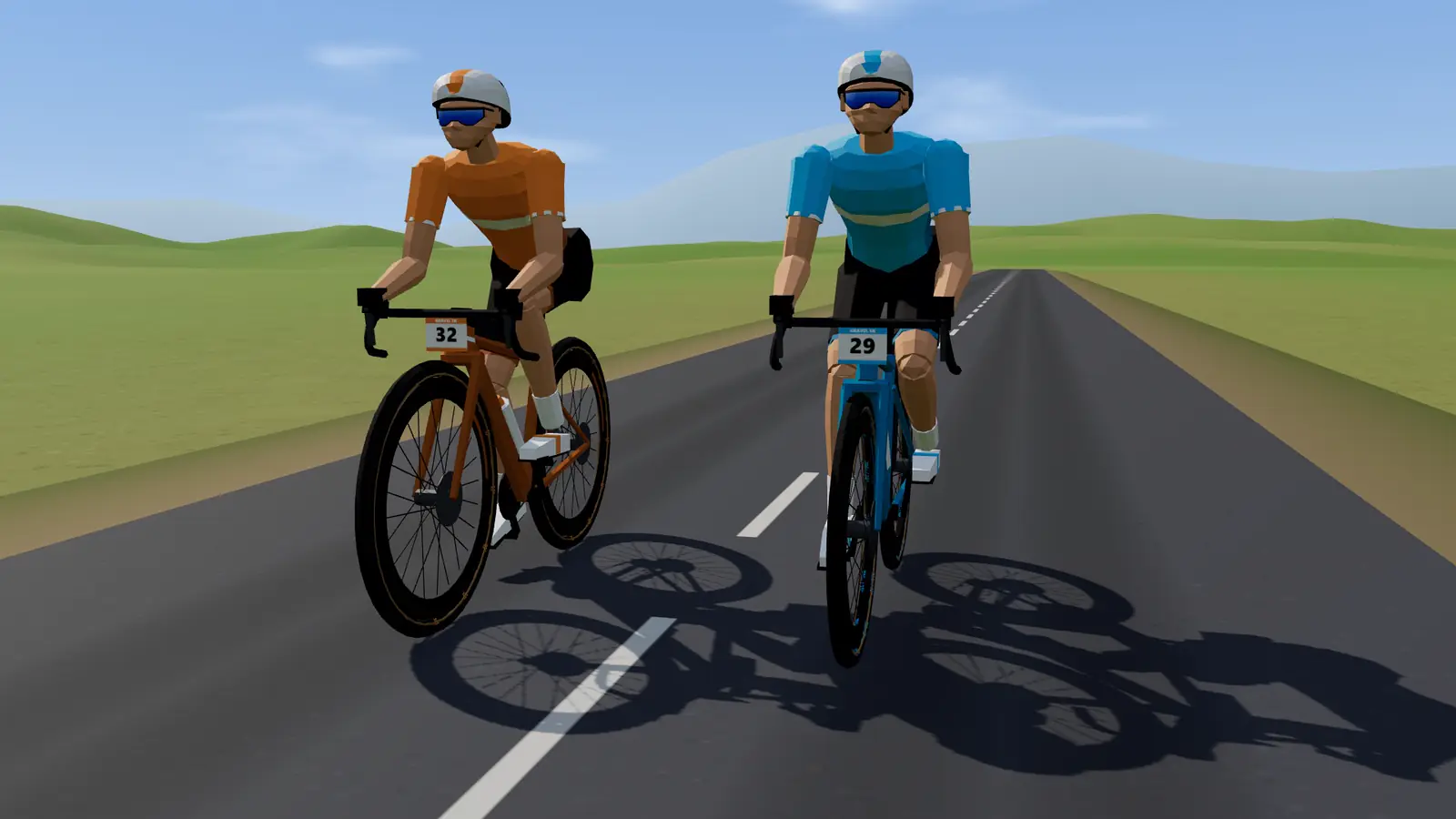
Wheel Size Lab races two identical gravel bikes, one on 700c (29″) wheels and one on 32″ wheels, over the same course with the same rider and the same power. Weight, wheel inertia, tyre pressure, rolling resistance, bumps and wind drag are all accounted for.
Probably faster, mostly on rough ground, by less than the headlines suggest
Same rider, same 220 watts, same 50 mm tyres at matched pressure, over 5 km of pavement, gravel, washboard, cobbles and roots:
Seconds gained by the 32″ bike over the same 5 km course, for each of the simulator's five calibrations. See the sources behind them.
Where the time comes from
The bigger wheel gains almost nothing on smooth pavement. It gains the most where the ground is rough or loose: washboard, chunky gravel climbs and roots. The extra weight never costs more than the rolling savings give back on this course.
Watch each segment explained in the film, or build your own course in the simulator.
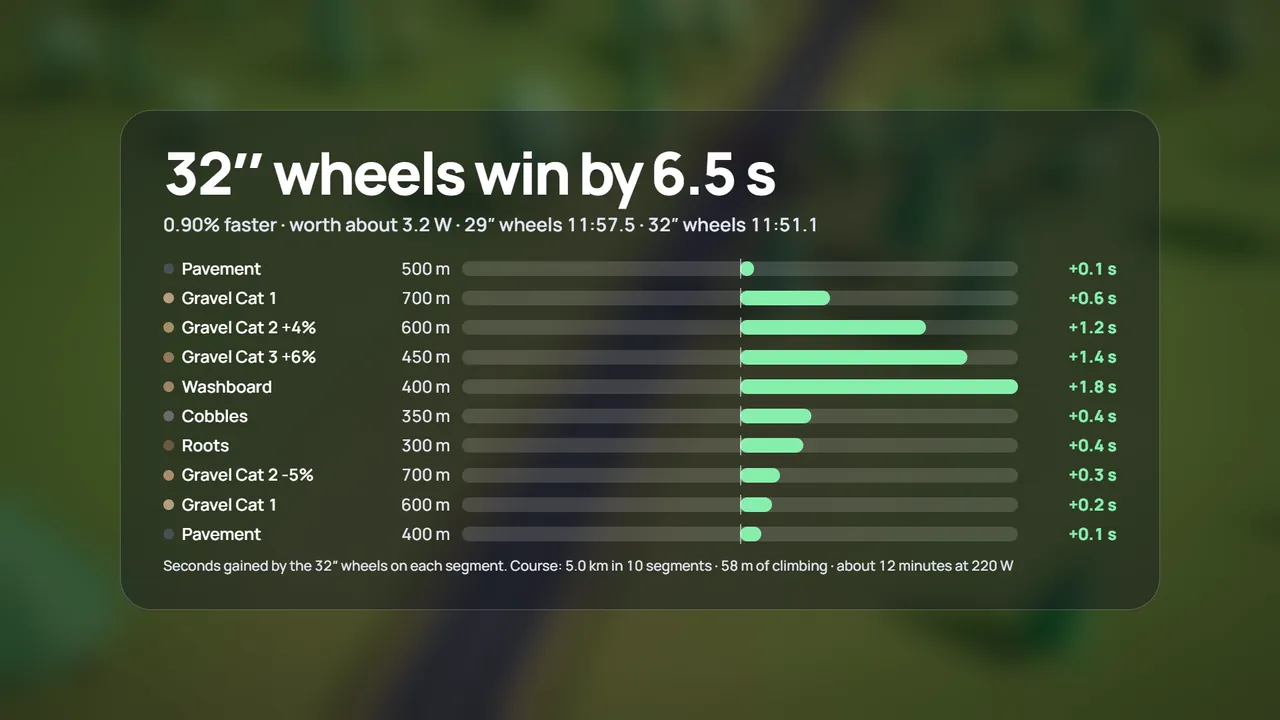
| Surface | Length | Grade | 32″ gains |
|---|---|---|---|
| Smooth pavement | 500 m | flat | +0.1 s |
| Cat 1 gravel (smooth hardpack) | 700 m | +1% | +0.6 s |
| Cat 2 gravel (some loose stone) | 600 m | +4% | +1.2 s |
| Cat 3 gravel (chunky, rutted) | 450 m | +6% | +1.4 s |
| Washboard (corrugations) | 400 m | flat | +1.8 s |
| Cobblestones | 350 m | flat | +0.4 s |
| Rooty singletrack | 300 m | −1% | +0.4 s |
| Cat 2 gravel descent | 700 m | −5% | +0.3 s |
| Cat 1 gravel | 600 m | −2% | +0.2 s |
| Smooth pavement | 400 m | flat | +0.1 s |
| Whole course | 5.0 km | 58 m up | +6.5 s |
Everything equal except the wheels
Both bikes carry the same 75 kg rider producing a constant 220 W, on the same 50 mm fast gravel tyre. The 32″ bike gets the frame, fork and wheels it needs, which makes it heavier and slower to spin up, and it pushes a little more air. In return its tyres meet the ground differently.
| 29″ (700c) | 32″ | Change | |
|---|---|---|---|
| Rim bead seat diameter | 622 mm | 686 mm | +64 mm |
| Outer diameter with a 50 mm tyre | 722 mm | 786 mm | +9% |
| Complete bike weight | 8.75 kg | 9.18 kg | +428 g |
| Wheel inertia (one wheel) | 0.122 kg·m² | 0.163 kg·m² | +34% |
| Drag area CdA, rider on the hoods | 0.380 m² | 0.384 m² | +1.0% |
| Contact patch length | 134 mm | 140 mm | +4% |
| Angle of attack on a 15 mm bump | 16.6° | 15.9° | 4.2% flatter |
| Suggested pressure, same tyre drop | 25.0 psi | 23.9 psi | −1.1 psi |
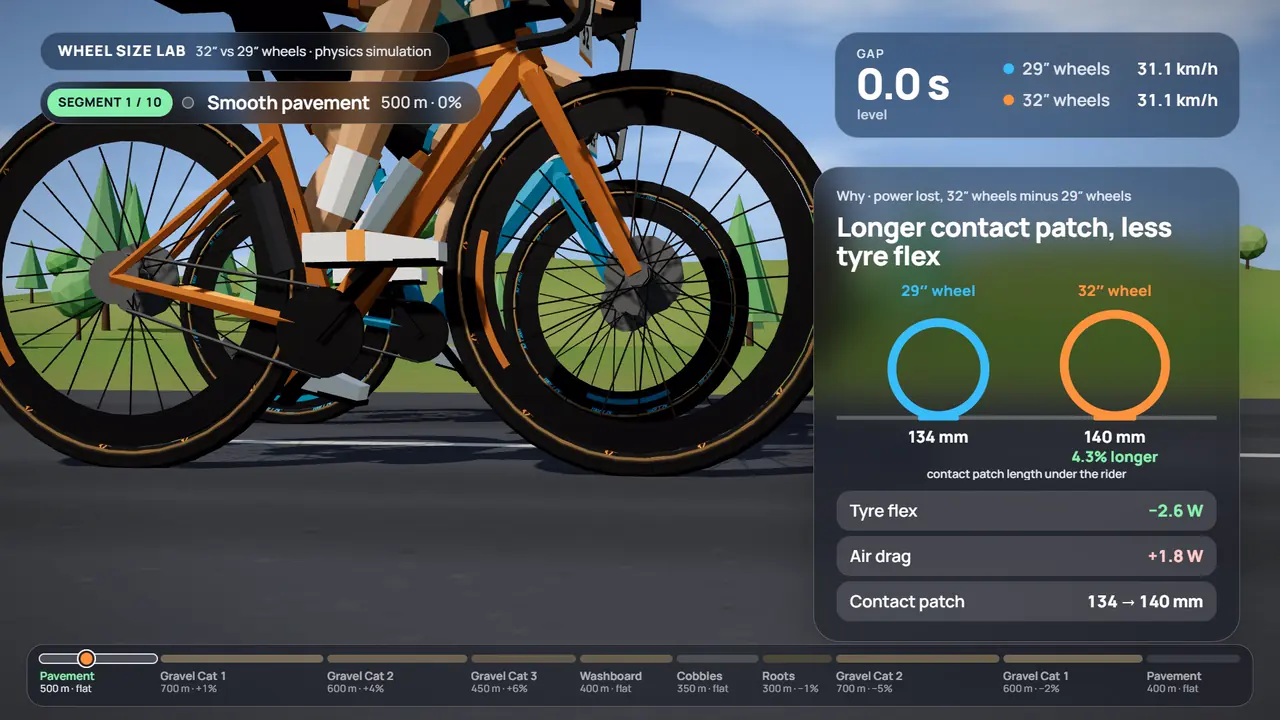
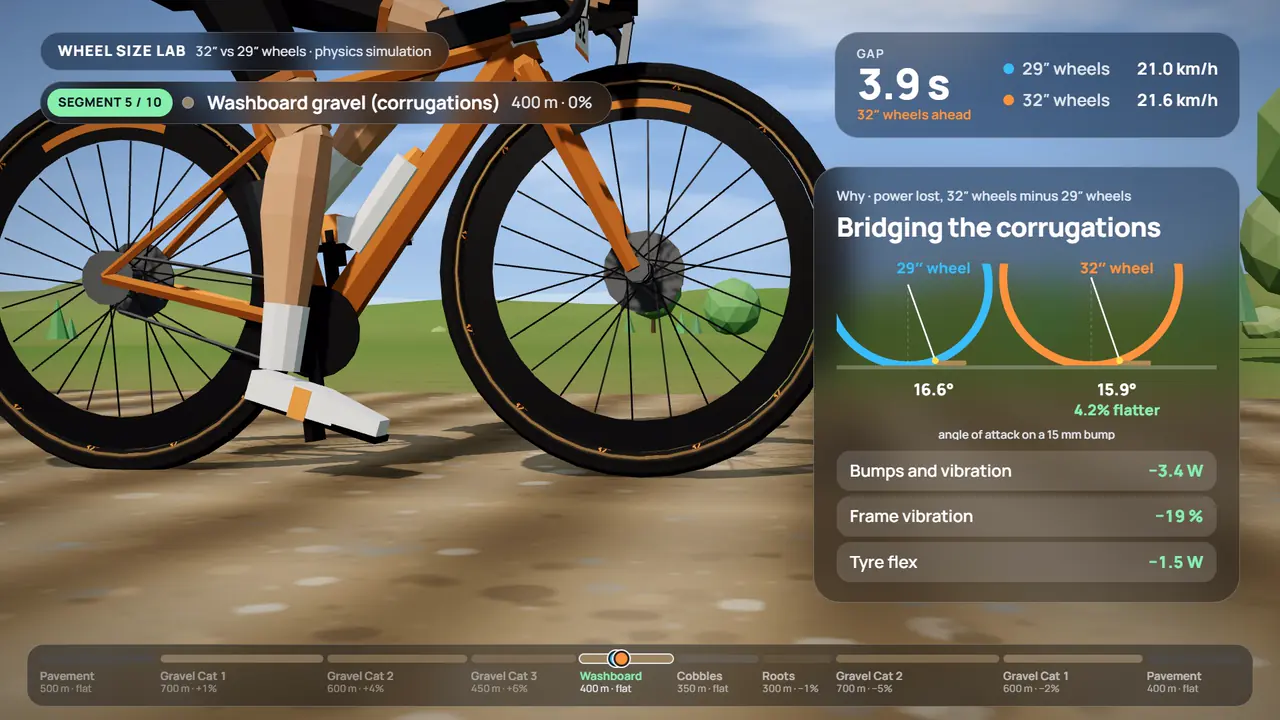
Change anything and race again
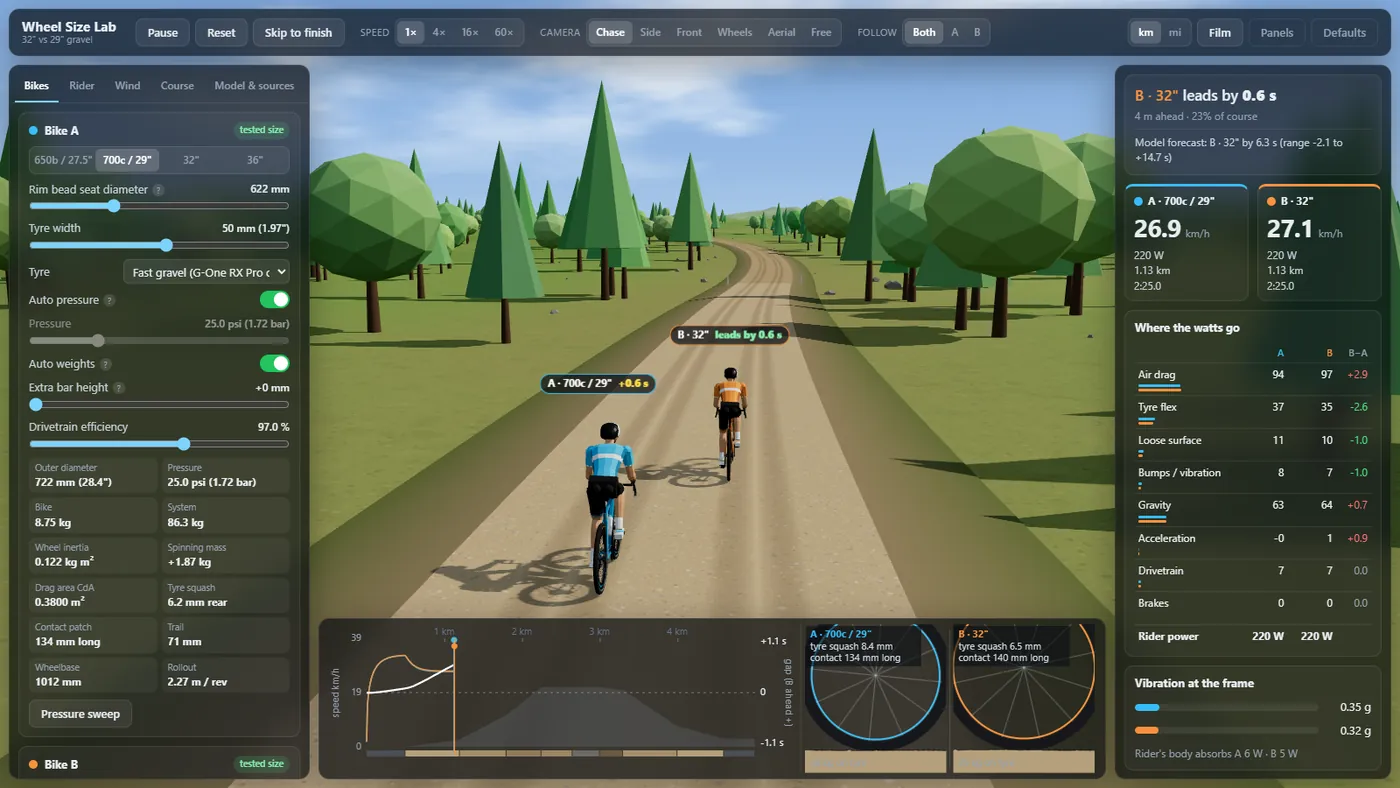
Bikes and tyres
Wheel size from 650b to 36″, tyre width, tyre model, pressure with automatic suggestion and sweep, wheel and bike weights.
Rider
Weight, height, power, position on the bike, body tension, realistic pacing and standing starts.
Wind and air
Wind speed and direction with yaw, temperature and altitude.
Course
Presets or your own segments: seven surfaces, any length and gradient.
Runs in the browser on computers and phones. Nothing to install.
Explore Wheel Size Lab
How it works
The physics model, what is included and what is not.
Read more →Research
Every test of 32″ against 29″ wheels, with links, next to the model.
See the sources →Videos
The 5-minute race film and five shorts, with a full transcript.
Watch →FAQ
Climbs, pavement, pressure, accuracy and more.
Get answers →